

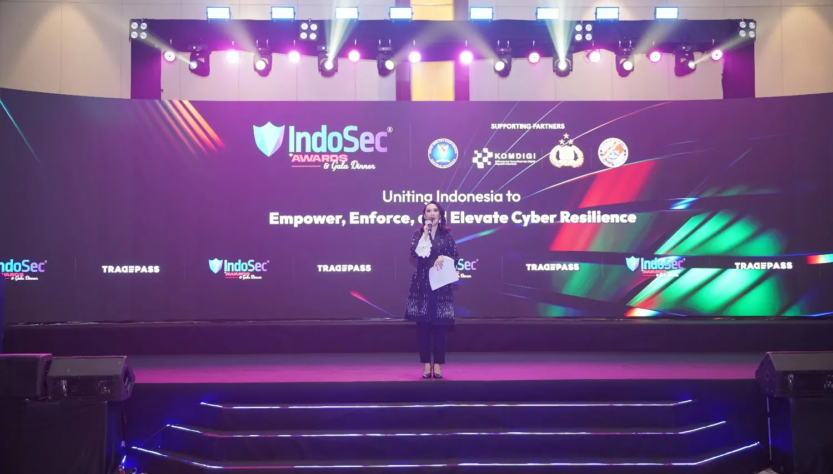
A cyberattack rarely begins with a dramatic shutdown. More often, it starts quietly: an unusual login, a compromised account, or a device communicating with an unfamiliar server. By the time employees notice something is wrong, an attacker may already have moved through the environment. For organisations that want to strengthen this early-warning capability, a cybersecurity event for professionals can offer practical insight into detection, response, threat intelligence, and modern security operations.
Detection Is More Than Seeing an Alert
Many businesses already have firewalls, endpoint protection, email security, vulnerability scanners, and SIEM platforms. The problem is connecting their signals quickly enough to understand what is happening. A single failed login may look harmless. Repeated failures followed by a successful login from an unusual location tell a different story.
If that account then accesses a sensitive database, downloads large volumes of information, or creates a new privileged account, the sequence becomes a potential attack narrative. Security teams therefore need context, correlation, and behavioural analysis rather than endless alerts.
What Helps a Business Detect an Attack Early?
Early detection depends on multiple layers working together. Organisations should consider whether their security programme can answer these questions:
- Can unusual user and device behaviour be identified quickly?
- Are critical assets continuously monitored?
- Can security teams correlate events across endpoints, cloud services, networks, and identities?
- Are high-risk alerts prioritised according to business impact?
- Can analysts investigate an incident without switching between disconnected systems?
EDR, XDR, SIEM, NDR, UEBA, threat intelligence, and SOAR can strengthen these capabilities. Technology alone does not create effective detection. Poorly tuned rules can generate alert fatigue, while incomplete asset inventories can leave blind spots that attackers exploit.
Why Behaviour Matters
Traditional controls focus on known indicators such as malicious files, IP addresses, domains, or signatures. These remain useful, but attackers frequently abuse legitimate tools and stolen credentials. An employee account suddenly authenticating from an unusual location may deserve investigation.
A server making an unexpected outbound connection could indicate command-and-control activity. A privileged account behaving differently from its normal pattern could signal credential compromise. Behaviour-based detection helps security teams identify anomalies even when the exact attack technique has not appeared in a threat database.
The Human Factor Still Matters
Automation can accelerate detection, but people still determine whether an alert represents genuine risk. A mature Security Operations Centre needs analysts who understand the organisation’s infrastructure, business processes, threat landscape, and incident-response procedures.
This requires clear escalation paths. If a critical alert appears at 2 a.m., nobody should be debating who has authority to isolate a server. Incident response playbooks should define responsibilities, containment actions, communication channels, evidence preservation, and recovery priorities before an incident occurs. Regular tabletop exercises can expose gaps that technology dashboards cannot.
Can AI Improve Cyberattack Detection?
AI and machine learning increasingly identify patterns across large volumes of security telemetry. They can prioritise alerts, detect anomalies, summarise incidents, and identify relationships that might otherwise take hours to uncover. Yet AI should not replace human oversight.
Detection models can produce false positives, miss novel behaviours, or misunderstand legitimate business activity. The strongest approach combines machine-assisted analysis with experienced security professionals and well-defined response processes.
Visibility Must Extend Beyond the Office Network
Cloud platforms, SaaS applications, remote workers, APIs, third-party vendors, and connected devices have expanded the attack surface. A business may have excellent protection around its traditional network while leaving identity, cloud workloads, or supplier connections poorly monitored.
Identity is particularly important. Stolen credentials can allow attackers to bypass several perimeter controls without deploying obvious malware. Strong authentication, least-privilege access, privileged access management, continuous monitoring, and identity analytics can therefore form a critical part of detection strategy.
Learning From the Wider Security Community
Cybersecurity teams do not operate in isolation. Threats evolve quickly, and defenders benefit from exchanging practical lessons about ransomware, cloud misconfigurations, social engineering, supply-chain attacks, zero-day vulnerabilities, and emerging defensive technologies.
This is where industry gatherings can become useful. The best cybersecurity events in Indonesia can bring security leaders, practitioners, technology providers, and public-sector experts into the same conversation, creating opportunities to compare approaches and understand how organisations are addressing similar risks.
Detection Should Lead to Action
Detecting an attack is only the first half of the problem. A security team must know what to do next.
A useful response framework should cover:
- Validate: Determine whether the alert represents genuine malicious activity.
- Scope: Identify affected accounts, endpoints, applications, and data.
- Contain: Limit attacker movement and prevent further compromise.
- Investigate: Preserve evidence and determine the attack path.
- Recover: Restore trusted systems and remove persistence mechanisms.
- Learn: Update controls, playbooks, and training based on findings.
The objective is not simply to produce faster alerts. It is to reduce attacker dwell time and minimise business impact.
Building a More Predictive Security Posture
No organisation can guarantee that every cyberattack will be detected before damage occurs. Cybersecurity is about managing risk through stronger preparation, visibility, and response. Businesses can improve their security posture by combining continuous monitoring, threat intelligence, identity protection, endpoint visibility, skilled analysts, automation, and tested response plans.
The real question is not how many security tools an organisation owns, but whether those tools can identify meaningful signals and support timely action. As threats continue to evolve, professionals also need current industry knowledge. Events such as IndoSec can help security teams understand emerging risks, exchange practical insights, and strengthen their overall cyber defence strategy.
Conclusion
Early cyberattack detection is no longer optional for businesses operating in a connected environment. Strong monitoring, behavioural analytics, identity controls, skilled security teams, and tested response plans can help organisations spot suspicious activity before it develops into a costly incident. The goal is not to eliminate every threat, but to shorten detection time, limit exposure, and respond with confidence.
IndoSec supports this broader cybersecurity conversation by bringing professionals and industry stakeholders together to discuss emerging threats, practical security strategies, and the technologies shaping modern cyber defence. As one of the best cybersecurity events in Indonesia, it provides organisations with opportunities to explore evolving risks, exchange practical insights, and strengthen their detection and response capabilities.